August lets the warm temps linger, so you can go all-out, all day and opt for some R&R in villages with mountain views or tiny towns shaped in every way by the sea.
Acadia National Park, Maine
Rockefeller’s Teeth
In the early 20th century, two passions of philanthropist John D. Rockefeller Jr collided in the luckiest of ways for future visitors. He devoted his time and energy to both: roadbuilding and horseback riding to stunning viewpoints. The natural result: a state-of-the-art road system, with many optimal views. He kept safety in mind, too, plunking down large granite blocks along the roadsides as guardrails. Roughly cut and irregularly spaced, the boulders became affectionately known by locals as “Rockefeller’s Teeth.” You can spend long, balmy days getting to know the mountains and valleys of Acadia National Park, guided by grand views and the occasional granite grin.
Consider the Lobster
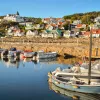
Down in the snug harbors, before the sun rises each morning, the lobster boats begin motoring out to sea. These daily processions began in the early 1800s, with only small wooden sailboats and rowboats. As lobster became a more popular dish, lobstering turned into a commercial enterprise, and the boats evolved. Boatbuilders passed down their skills and designs through families and brought Maine into the spotlight as a center of regional boatbuilding. The lobster boat earned its place as a distinct vessel type, with each new model expressing its character: the Peapod, the Friendship Sloop, the Torpedo Stern.

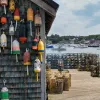
Buoys affixed to the boats are painted in combinations of colors, dots and stripes, but they are more than just decorative. They function like personal signatures or family crests, some with intergenerational history, others chosen by lobstermen/women when they are starting out and kept throughout their careers. The buoys are taken seriously, as they help to prevent gear conflicts and maintain age-old territorial fishing rights.
Following suit, there are strategies, superstitions and secrets around bait recipes. Some lobstermen/women swear by their grandfather’s bait mix, while others experiment with new combos. The ingredient list may not sound mouthwatering—herring (the “gold standard”) or “racks,” the bones and meat leftover after a fish has been filleted—but the recipes can make the difference between a successful haul and going home empty-handed.
It will, of course, be a proper nod to summer if you cap off any adventure in Maine with a big lobster dinner.
Switzerland
Tunnel Vision
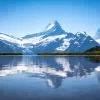
Taking a “healthy hike” is the summer norm for those with spectacular mountains all around. In fact, the Swiss engage on all levels with their mountains and have even earned themselves a global reputation as pioneers of tunneling.
It took thousands of workers and nearly two decades to carve a path through the Gotthard massif, transforming over 35 miles of solid mountain into the longest railway tunnel in the world. This behemoth is flanked by many smaller versions as well: Switzerland is home to more than 1,300 tunnels.
Many of them have storied pasts. During the Cold War, the Swiss government built an astonishing 370,000 safety bunkers so every citizen would have a place to shelter; each one is connected by tunnels. This massive effort sharpened Switzerland’s engineering and construction know-how and helped create a deep cultural connection to this very particular skill.

The Dalai Lama’s Wine
Though the idea of bunkers suggests a wartime orientation, Switzerland has in actuality been practicing the art of being peaceful since 1815, when the Treaty of Paris cemented its military neutrality; it hasn’t joined a foreign war since.
It’s only fitting that one of its landowners is a champion of peace himself. Tucked into the Swiss landscape is the smallest vineyard in the world, owned by the Dalai Lama, and made up of just four remarkably resilient vine stocks. The vineyard was originally planted in honor of Joseph-Samuel Farinet, the 19th-century “Robin Hood of the Alps,” who counterfeited coins to give to the poor. Twenty years later, it was gifted to the Tibetan leader, and each year he auctions off 1,000 bottles of “Peace Wine” (supplemented with wine from neighboring vineyards) and donates the proceeds to those in need.
Mountainous, dry, with notes of philanthropy, Switzerland pairs beautifully with August.
Denmark
No Man Is (Ever Far from) an Island
Denmark is a land made plural by the sea. The small country fans outward via its 1,400 enchanting islands. Four hundred and forty-three are named, 78 are inhabited, and the collection is still evolving, with new islands emerging through natural sedimentation or human design. Others have vanished, like Jordsand, which shows up in records as far back as 1231, but was at last claimed by the sea in 1999.

Even the mainland is sea-tempered. Denmark ranks third in the world for the longest maritime coastline, stretching an impressive 32,633 miles. As a result, they can claim this fun fact: no Dane is ever more than 50 kilometers from the sea (which may explain why swimming lessons are mandatory in school curricula).
A Story Unfurls
The Danish flag, the Dannebrog, holds the Guinness World Record as the world’s oldest continuously used national flag and has been sporting the same design since 1625. But it isn’t just old, it’s legendary. According to folklore, the flag made its dramatic entrance on June 15, 1219, by falling from the sky during the Battle of Lyndanisse, delivering divine encouragement to King Valdemar II and his troops as they fought the pagan Estonians. This heavenly moment is still celebrated as Valdemar’s Day, but the Dannebrog doesn’t just stay tucked away in government buildings on other days. Danes fly it for birthdays, holidays and celebrations, and some even use it as decoration on cakes and Christmas trees.
This sweeping, seaside land is absolutely lovely in summer. Any way you decide to go, you’ll be clamoring to hoist the Dannebrog by the time you’re through.
Iceland
Written on the Land
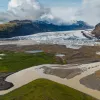
Reykjavik, Iceland, is the northernmost national capital in the world, where approximately 60 percent of the country’s population resides. But trek outward from the city, and the lighthouses begin to outnumber the villages.
This grand island yielded a cozy, close-knit culture, and language and storytelling are its beating heart. Raised on the ancient Sagas that first recorded the island’s history, Icelanders publish more books per capita than any other nation in the world: one person in 10 will publish a book in their lifetime. They remain connected to the roots of their official language, descended from Old Norse, as it has changed so little that modern students can read books written hundreds of years ago. Even art installations send a literary message: the “Word from a Bench” project features benches in public parks with QR codes for visitors to scan, so they can sit and listen to readings of stories and poetry by English and Icelandic authors.
Pleasant Creatures, Great and Small
Icelanders share their home with many creatures, but you’ll be happy to hear that a certain few will not be joining you during your stay. Mosquitoes don’t exist there at all. Polar bears do sometimes drift in on ice floes from Greenland, but they don’t take up residence. Pet reptiles like snakes are illegal—in fact, there are no native reptiles or amphibians on the island. The creatures you need to keep an eye out for are of the imaginary ilk. A high percentage of Icelanders still believe in elves, and this is taken seriously enough that roads are occasionally rerouted to avoid disturbing rocks or landscapes that might be elven homes.

Keeping this in mind, you are ready to head outdoors. Hike among steam vents and boreholes, cozy up to waterfalls, board a private Super Jeep to explore remote, snowy canyons or don crampons for an ice walk with local mountain guides. You’ve got plenty of daylight in August to adventure, look for elves and get to know some Icelanders. Everyone, including the president, is on a first name basis (even the phone book is organized alphabetically by given name), so make sure to offer a handshake and try out a hae! or halló!
Ireland
Top O the Mornin’
The modern way to experience Ireland’s epic past is to hop out of bed, saddle your two-wheeled steed and cycle right into it.
The Siege of Kinsale, a quaint stop on several Backroads bike trips, was one for the history books; it ended the Nine Years’ War. Locals still tell eerie tales of ghosts of colorful characters like “Red Hugh” of the powerful O’Donnell clan. By age fourteen, he was known throughout Ireland as his family’s heir and was soon engaged to the daughter of a prominent lord. The English were incensed; the alliance threatened their control. They had him kidnapped by wine merchants and thrown into prison.
He made a daring escape, but was captured, tossed back in a tower and doubly shackled. A second, better-orchestrated escape was led by his clansmen, and once he was free, they placed him in his rightful position as clan chief. Though his efforts at the battle of Kinsale ended in a tragic loss, the fierce young warrior lives on as a folk hero, joining the ranks of William Wallace of Braveheart fame.

These tales are still told by storytellers called shanachie. They are like living libraries, memorizing and passing on centuries of knowledge and are renowned for spinning historic accounts into riveting performances. Opting for a Backroads trip with an evening of tale-telling by one of these modern-day bards adds a living voice to the history you’ve spent the day winding through.
We’ll also make sure your escape is perfectly planned, right down to the last detail. From prehistoric stone circles to pints at the pub, it’s all fodder for years of your own tale-telling to come.