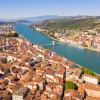
Cycling in Provence offers a striking contrast to the rugged roads of Cornwall. From vineyard-lined routes and mountain vistas to a deeply ingrained cycling culture, every ride reveals a different side of southern France.
The scent hit me before I saw the flowers. Riding along a quiet Provençal road in the early summer sunshine, I expected endless purple lavender fields stretching towards the horizon. Instead, the countryside glowed bright yellow, and the air was filled with a sweet fragrance that seemed to drift across every hillside. The flowers were genêt, known in the UK as Spanish broom. We call it broom because it was once used to make, well, brooms. It is even used in one of Chanel’s perfumes. It wasn’t the Provence I had imagined—lavender doesn’t flower until later in the season—but it was every bit as captivating.
I love the UK in many ways, but cycling there can sometimes be dreary. The weather is unpredictable in the warmer months and somewhat gloomy in the winter. Maybe that’s why the contrast of cycling in Provence in the summer was so stark for me. Provence was so much more than my initial expectations of lavender and soap. The sunshine, the colors, the scents and the landscapes combined to create an experience that was both familiar and completely different from anything I was used to at home.
From Cornwall to Provence
Before life at Backroads, I commuted by bike when I worked at a school in Cornwall. Cornwall is truly beautiful, with its rugged coastline, plenty of greenery, narrow little country lanes, granite Celtic crosses and more. The ride to work put me into the right frame of mind for the day, and the ride home was the perfect way to decompress after a day in the classroom. My daily sights always included farmland, cattle, horses and lots of trees. I also often saw mist hanging over the fields and roads damp from overnight rain. The scenery was wonderful, though the occasional battle against a stiff Atlantic headwind could make it rugged and challenging.
Wine, Olive Oil and the Rhythm of the Ride
The vistas in Provence are also beautiful but in an entirely different way. One of the highlights of the region is Sainte-Victoire near Aix-en-Provence. Mont Sainte-Victoire looms over the landscape from both the road and the town itself, and the Backroads route takes us right into its foothills. We can’t help but admire the Croix de Provence, an 18-metre cross erected not on the mountain’s highest point, but on a prominent summit chosen for its visibility across the region. Rather than observing it from afar, we gradually draw closer with every turn of the pedals.
A weekend ride for leisure or pleasure back home invariably includes a visit to the seaside, often stopping for a hot chocolate to warm up from the cold. Yes, even in the summer this can be the best beverage. Provence is more about the wine than the hot chocolate, and for good reason—the local wines are fabulous, and we ride past miles of grapes which will become next year’s wine. We stop for coffee at a lovely brasserie in Châteauneuf-le-Rouge, a quiet and charming village just outside Aix. (It shouldn’t be confused with Châteauneuf-du-Pape, north of Avignon, which is famous for its powerful Rhône red wines.) We cycle through endless vineyards and stay in a wonderful hotel nestled within its own estate, where we enjoy a well-earned glass of crisp, dry rosé wine at the end of the day.
One of my favorite rides in the area begins with what would be almost unimaginable back in Cornwall: a swim. Shortly after setting off, we stop at a local lake where we can cool off in the clear water before climbing back onto our bikes. Refreshed and ready for the day, we head up into the surrounding hills. This route offers a steady climb that rewards us at the end with not just the scenery, but with another of Provence’s great traditions: an olive oil tasting. Sampling local oils after a morning spent riding through the landscapes where the olives are grown feels like a perfect pit stop on the ride.
On another day we ride through even more rows of vines before arriving at a quintessentially Provençal setting: part vineyard, part art gallery and part country house, all surrounded by the landscape we spent the morning cycling through. This is the location of our famous Backroads’ picnic lunch. Fresh local ingredients, excellent bread, regional cheeses and plenty of opportunities to relax combine to create something far more memorable than a simple lunch stop.
A Different Cycling Culture
Over 15 years of cycle commuting in Cornwall, I encountered all sorts of situations alongside many enjoyable rides. I was once shouted at by a bus driver who pulled up next to me and another time a motorist blocked my path while waiting at a roundabout. On one occasion a driver reversed into me on a dark evening despite the visibility provided by my fluorescent clothing and bright lights.
What a contrast France can be. Cycling here almost always feels safe, even in larger towns or on the Côte d’Azur. Perhaps it is the respect afforded to cyclists, the national attitude towards sharing the road or simply the abundance of dedicated cycling infrastructure. Whatever the reason, French motorists seem to expect and respect cyclists. Overtakes are often wider and more patient. Rather than an obstacle, cyclists are legitimate users of the road.
Cycling is deeply woven into French culture. The sport has been hugely popular since the late 19th century, long before the Tour de France began in 1903. Today, that enthusiasm remains evident everywhere, from village cycling clubs to major professional races. The French government’s Plan Vélo initiative aims to encourage even more people onto bicycles through investment in infrastructure, schools and businesses. It is difficult not to notice the difference.
The enthusiasm for cycling is visible everywhere. During one ride, we were stopped by a local resident who was curious about our bikes. Backroads uses titanium bicycles, and their distinctive appearance had caught his attention. What followed was a friendly conversation about cycling, equipment and the routes in the area.
It was a small interaction, but one that stayed with me. In some places, cyclists can feel like an inconvenience or an afterthought. Here, the encounter felt more like a meeting between members of the same community. Moments like that reinforce the impression that cycling is not simply a sport in France. It is part of everyday life and part of the national culture.
From Quiet Roads to Saint-Tropez
Don’t get me wrong, not all cycling in France is deserted roads and stops for croissants and coffee. The French Riviera is simply stunning but wildly popular for exactly this reason. People flock there to rub shoulders with the rich and famous or to browse through the extensive range of boutique shops. The harbor is jam-packed with a boggling array of superyachts. Backroads, as always, has found a way to incorporate the intoxicating dizziness of Saint-Tropez with the peaceful pleasure of riding through the countryside. By utilizing the water taxi from Sainte-Maxime, we are able to join the throngs and participate in the hubbub without battling through traffic on the surrounding roads. The atmosphere is intoxicating, energetic and occasionally overwhelming.
So which do I prefer?
Cornwall’s cooling winds and tiny lanes, expansive greenery and evocative mists, seaside villages and Celtic heritage? Or Provence’s grand vistas and rewarding climbs, sea breezes and hotel pools, Provençal villages and the glorious madness of Saint-Tropez?
For me, it is impossible to say.
Fortunately, I do not have to choose between them. The joy of cycling lies in discovering that very different roads can offer the same simple reward: the freedom to turn the pedals, explore the landscape and see what lies around the next bend.