What is a hay bath, and why has it remained a beloved wellness tradition in Italy’s Dolomites for centuries? Our writer Christine Sarkis takes one for the team and braves a traditional Alpine hay bath while exploring the region’s distinctive blend of herbal remedies, mountain healing practices and Central European spa traditions that continue to shape wellness culture today.
“When in the Dolomites...” I say to myself as I clamber onto a spa-treatment table layered with warm, wet hay. This isn’t just any old hay, my spa attendant assures me. It’s high-altitude Alpine hay, rich in essential oils, perfect for soothing sore muscles after a day on the trail. Gingerly, I settle myself back on this gently bristly bed and curiously await to see what this famed Dolomiti hay bath is all about.
My attendant disappears for a moment and returns with a heavy muslin sack filled with more floral and grassy scented, freshly cleaned and steamed hay. She piles it onto me until I’m enveloped in grassy warmth, then swaddles me in a large linen shroud. This is... unusual, I think, just as she makes things even stranger, pulling three metal arches from beneath the table and assembling a frame around me. She then drapes plastic over the bars, creating a greenhouse around my cocooned form.
For the first few minutes, I lie there, bewildered. I’ve been to more than 50 spas around the world and this is... unique. Questions swirl in my head: How can this be a real thing? Will my body be covered in hives when she unwraps me? How long will I remain a hay mummy?
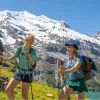
But slowly, I relax into the strange embrace and drift into sleep. Thirty minutes later, the spa attendant returns to unbundle me. The shower afterward is a lengthy affair. Hay, it turns out, is remarkably persistent. But I quickly notice how soft my skin feels, and that evening, when my husband mentions how sore he is from our 10-mile hike with 2,400 feet of elevation gain near Sasso Lungo, I realize my own muscles feel surprisingly good.
The Deep Roots of Wellness in the Dolomites
I’d booked my hay bath at Granbaita Dolomites to experience firsthand how local ingredients and centuries-old traditions continue to shape modern spa rituals in Italy’s Dolomites. Here, wellness isn’t viewed as a trend or an indulgence; instead, it’s been woven into daily life as naturally as eating, sleeping and hiking for as long as anyone can remember.
Natural springs in this UNESCO World Heritage region have attracted visitors for more than two millennia, and healing practices evolved largely thanks to its geographic position as the crossroads of several cultures. Ancient Celts and Romans believed in the restorative powers of mineral-rich waters, while Indigenous Alpine people had folk remedies built around mountain plants and local ingredients. By the 19th century, small inns were welcoming travelers seeking the health benefits of mountain air and mineral waters. In some spa towns, guests followed prescribed drinking and bathing cures drawn from local springs, practices that remained popular well into the early 20th century, when this part of the Dolomites was still part of the Austro-Hungarian Empire.
Because of this Hapsburg influence, wellness culture developed differently from much of the rest of Italy. Alongside the pleasures of la dolce vita, you’ll find a distinctly Central European approach to health and healing: spa customs that emphasize therapeutic bathing, including Kneipp hydrotherapy, herbal remedies, thermal treatments and nature-based cures designed to work in harmony with the surrounding landscape.
So... Why a Hay Bath?
As the story goes, farmers spending long days harvesting hay for the winter noticed that a nap atop a freshly cut haystack seemed to soothe sore muscles and ease the aches of hard physical work. At these high elevations, medicinal plants such as wild thyme, arnica and gentian grow alongside the grasses and are gathered as part of the harvest. Over time, those observations evolved into one of the Dolomites’ most distinctive wellness traditions: the hay bath.
Today, you’ll find two versions of the treatment at many hotels and spas in the region. There’s the steamed hay cocoon that I experienced, and there’s an infused-water variation that someone described to me as “like taking a bath in hay tea.”
Spa menus throughout the Dolomites also feature body scrubs made with mountain pine, massages that incorporate handcrafted spruce and larch tools, aromatherapy blends scented with Alpine herbs and wellness circuits that include saunas and mineral-water cold plunges.
Here, the common thread of traditional wellness is nature. The mountains, forests and high-Alpine meadows aren’t simply a backdrop—they’re the source. Even when you’re tucked away in a tranquil treatment room, the natural world never feels far away. In the Dolomites, wellness isn’t about escaping the outdoors. It’s about deepening your connection to it.
Christine Sarkis is an avid hiker and spa enthusiast. Over the course of her two-decade career as a travel journalist, she has visited dozens of countries and firmly believes that a country’s wellness traditions are a wonderful window into its culture. She spent a week in the Dolomites on Backroads’ Lodge-to-Lodge Hiking Trip in late September.
Want more travel stories and tips? Sign up for our emails:
More Travel Inspiration