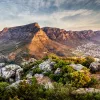
On our South Africa & Botswana Active Safari Trips, guests explore the rugged beauty of the Cederberg Wilderness, a region famed for its dramatic sandstone formations, ancient rock art and deep ecological significance. Through our Give Back Field Project program, Backroads proudly supports community-led conservation efforts here. Read the story from Dawie Burger, founder of Sustainable Ceder, whose work is protecting one of the Cederberg’s most endangered and iconic species: the Clanwilliam cedar (Widdringtonia cedarbergensis).
The Cederberg isn’t just where I work. It’s where I live, walk and learn every day.
Over the years, I’ve watched this landscape change. Fires are more frequent, rainfall is less predictable and the Clanwilliam cedar, one of South Africa’s most iconic and critically endangered trees, has been pushed to the brink. Today, only a few thousand mature trees remain in the wild.

Sustainable Ceder was established in 2023 by a small team of conservation-minded people living and working in the heart of the Cederberg. Our focus is simple but urgent: restore the Clanwilliam cedar for the health of the ecosystem and for everyone who lives in, works in and visits this region. From the start, we knew this work would only succeed if done in close partnership with local communities, conservation agencies and landowners.
In 2025, Backroads supported this effort with a contribution through its Give Back Field Project program. That support is helping us strengthen both our conservation work and the community systems that sustain it.
From Nursery to Mountainside

Our cedar restoration work begins in the nursery. We collect and process seed from existing cedar populations, carefully separating viable seeds and growing saplings using local soils that reflect the natural conditions of the Cederberg. This approach helps reduce transplant shock and improves survival rates once trees are planted.
We grow saplings for six to eight months before planting season, which runs from May through August. During this time, we collaborate with local communities and private landowners to identify strategic sites for satellite nurseries, one of which is on the property of the Bushmans Kloof Wilderness Reserve & Retreat, a hotel where Backroads guests stay on the South Africa & Botswana Active Safari Tour. This site serves as both a conservation initiative and an education platform for guests, expanding capacity while keeping stewardship local.

Planting takes place in carefully selected, high-altitude sites to reduce fire risk and improve long-term survival. Saplings are often nestled among rocky outcrops that provide shade and retain moisture. All planting equipment is carried in by hand, using modified backpacks designed to safely transport young trees across rugged terrain.
Monitoring for the Long Term

Every cedar sapling we plant is GPS-tagged and monitored at six months, twelve months and annually thereafter. We establish transect sites across varying soil types, moisture levels and temperature ranges to better understand where saplings are thriving and why.
This data-driven approach helps refine future planting strategies and provides valuable research opportunities for students and conservation partners. Cedar restoration is slow by nature, and learning from each planting season is essential to long-term success.
Conservation That Supports Community

Cedar restoration is also about people. Our work creates paid employment, builds conservation skills and supports trail maintenance and access routes essential for responsible tourism in the Cederberg. Through our Cederberg Guardian program, local community members actively protect their ecosystems. Backroads also donated bicycles to the program, improving planting and monitoring efficiency for the Guardians.
As trails reopen and infrastructure is restored, communities are better positioned to benefit from visitors while protecting the landscapes that make this region so special. Backroads’ support, through both the bike donation and the Give Back Field Project, ensures this work continues in a practical, community-led and resilient way.
Looking Ahead

Protecting the Clanwilliam cedar will take time, patience and collective effort. But each sapling planted is a step toward restoring an ecosystem and reinforcing the deep connection between people and place.
With partners like Backroads standing alongside us, we’re planting more than trees. We’re investing in the future of the Cederberg—a future that balances conservation, community and the responsibility we all share to care for the landscapes we love.
Learn More About Backroads' Commitment to Responsible Travel