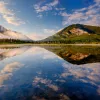
The vibrant forest that once blanketed the valley was gone. Standing at my favorite viewpoint, I felt as though I were at the raw edge of a deep scar.
I had returned to this spot nearly every summer—first on family camping trips and later as a Trip Leader for Backroads. But this time, instead of dense green slopes of spruce and pine, the mountains were lined with what looked like burnt matchsticks rising from blackened soil.
The Fire That Reshaped Jasper

Just a year earlier, lightning had ignited one of the most devastating wildfires in Jasper’s history. More than 25,000 people were evacuated, and over 30,000 hectares of land—an area roughly five times the size of Manhattan—were reduced to ash.
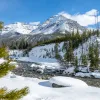
Tucked just north of Banff, its more famous neighbor, Jasper has long been a favorite summer escape for Canadians. It’s also where Backroads has built some of its most iconic trips, drawn to the region’s quiet roads, expansive wilderness and the timeless charm of a historic town shaped by the railroad and mountains around it.
I felt a strong pull to return, even as I wondered what, if anything, remained of the place I loved.
The signs of devastation were impossible to ignore. Nearly a third of the buildings and businesses had been destroyed, and some areas of town were completely erased. It was undeniably difficult to see a place I’d come to know so well altered so dramatically and even more difficult to imagine the impact on the people who call Jasper home.
The Strength of the Community

But it didn’t take long for my perspective to shift beyond grief.
What struck me most wasn’t the char or the ash—it was the resilience of the people and the land they relied on. It was the smiles and the stories from our local vendors who had leaned on one another in the months following the fire, rebuilding their community through shared effort, patience and hope. Again and again, I heard gratitude—not for what was lost, but for what survived.
From them, I was reminded that our forests are in a constant state of change—a process ecologists call succession. Succession is the gradual way ecosystems recover and evolve over time, moving from barren ground to rich, layered forests full of life.
Wildfire, as destructive as it can be, plays a key role in the early stages of succession. Pine cones, which hold seeds high in the crown of trees, are sealed with a tough resin that only the intense heat of a fire can break open. At the same time, fire also clears decades of built-up biomass—like turning soil in a garden—leaving behind warm, nutrient-rich ground ready for new life.
The First Signs of Renewal

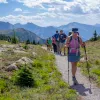
Walking along my favorite trail, I imagined those seeds germinating among the mosses, wildflowers and grasses that had already made the push through the dark earth. These hardy, fast-growing plants were the first to return, stabilizing the soil and laying the foundation for what comes next.
The landscape around me felt open and full of light in a way it never had before. With the canopy gone, sunlight reached all the way to the forest floor, illuminating new growth and bringing a sense of spaciousness to the valley. Hillsides that were once dense and shaded now felt expansive.
The more I walked, the more I started noticing movement in the stillness—subtle signs that life was returning in different forms.
I spotted my first white-headed woodpecker moving through the burned trunks, feasting on bark beetles that had moved in after the fire. I later learned that the presence of certain woodpecker species is often an indicator of a healthy, recovering forest—an encounter I likely wouldn’t have experienced in a more mature landscape.
A Landscape in Motion

Now, as Jasper enters its second summer since the fire, early recovery is well underway. Fungi emerge, while willow shoots and fireweed bloom brightly against the dark ground. Shrubs begin to take hold, drawing moose, white-tailed deer and bears back into the area to indulge in fresh shoots and berries. Slowly, trees will follow, and over time, the forest will begin to fill in once again.
Decades from now—perhaps 60 to 100 years—fire will likely return, restarting the cycle. Over time, these burns create a mosaic of landscapes at different stages of recovery—contributing to biodiversity and helping prevent future fires from growing too large. While it’s critical to understand how climate change is reshaping fire behavior, it’s just as important to recognize fire as a natural force in Western Canada’s landscapes.
Visiting Jasper now is undeniably different from what it was before—but that difference is what makes it extraordinary. Witnessing early-stage recovery is unique, humbling and deeply moving. This trip made me slow down, notice more and see the landscape differently. It was unlike any trip I’ve taken, and that’s what made it unforgettable.
Why Visiting Now Matters

After a significant drop in visitation during the first summer after the fire, this season is already seeing trip plans return to pre-fire levels. The desire to experience Jasper is as strong as ever—but rebuilding takes time, and local infrastructure is still recovering.
That’s why traveling thoughtfully matters now more than ever. Traveling with Backroads helps bridge that gap—offering well-planned trips that ease pressure on limited infrastructure while continuing to support the local businesses and communities working hard to rebuild.
As I spent the rest of the trip exploring the newly shaped landscape, it didn’t feel like devastation frozen in time. It felt active, changing. It felt like witnessing something rare and fleeting, the way people travel to catch a solar eclipse—knowing this moment won’t come around in quite the same way again. I found myself genuinely excited to return each summer, curious to see how the valley would continue to grow back and evolve, revealing something new each time.