Many countries call themselves “the crossroads of Europe,” but Romania has a particularly strong claim to take the cake. It’s where the Danube meets the sea, where the Balkans meet Central Europe, where Latin culture meets Slavic and where north meets south.
And that's part of the magic. With mountains, seashore, cities, food and wine, it’s a wonder this Eastern European country is still flying under the radar. That’s why we’re so excited to help a new generation of Backroads guests discover it.
Starting in 2027, we’re launching our Romania Hiking & Walking Tour to take you through the greatest highlights of Transylvania’s cities, mountains and countryside. Ready to get to know your new favorite corner of Europe? Read on.
Why Now?

Romania has always been beautiful and welcoming, but as it grows more prosperous it’s looking outward—and making headway in luxury tourism.
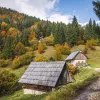
The poster children of this new tourism wave are ambitious hotel projects, restoring old buildings across the country. Bethlen Estates is one of these, set in the Transylvanian village of Criș. Or rather, the hotel is the Transylvanian village of Criș: it’s built into formerly abandoned, beautifully restored Saxon cottages, some of which are 300 years old.
Another property, MATCA Hotel, is newly erected but places a remarkable focus on the local: every detail of the rooms, from the carved wooden headboards of the beds to the curtains, blankets, art and flower arrangements, comes from artisans within the community.
Beyond hotels, Romania is investing in outdoor adventure. The Via Transilvanica, a 1,400‑kilometer long-distance trail crossing the country from north to south, was completed in 2022. Inspired by European routes such as the Camino de Santiago as well as by North American through-hikes like the Appalachian Trail, the Via was built with a focus on revitalizing the rural communities it passes through. This is epitomized by the fact that it's marked by hand-carved andesite bollards, whose commissioning has already given traditional artisans the chance to make the trail their own.
Romania Versus Transylvania

Transylvania is one region in the larger country of Romania, making up most of the country’s center-northwest. It’s an apolitical name, so throughout many stages of Romania’s history as a state (or not a state), Transylvania has always existed, belonging variously to neighbors such as the Austro-Hungarian Empire.
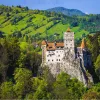
Transylvania is also the location of Bran Castle, the place chosen by novelist Bram Stoker as the home of his fictional villain, Count Dracula. Here is where we have the sad job of setting the record straight. The real-life Prince Vlad III “The Impaler”—also nicknamed “Dracula,” which is Romanian for “The Dragon,” due to the dragon on his coat of arms—was the prince of neighboring Wallachia. He never lived in Bran Castle, and he never ruled Transylvania at all!
With that said, there are plenty of Vlad connections here, like his birthplace in the Transylvanian town of Sighișoara. Transylvania is full of connections to Stoker’s iconic story, too. The demands of Romanian cooking do inspire many rural residents to hang garlands of garlic outside their doors. And modern Romanians, compared to other Europeans, are still deeply steeped in myth and superstition. Don’t be surprised if you get chatting with a villager who swears they’ve had a close call with a strigoi (vampire)!
Beyond its supernatural name appeal abroad, Transylvania is known in Romania (and throughout Europe) as the country’s tourist-friendly heart. It’s the home of Romania’s highest mountains, its most impressive castles, its greatest concentration of World Heritage towns and cities. Thus, you won’t find it surprising that it’s where we decided to focus our Backroads itinerary.
Latins in a Sea of Slavs

Who are the Romanians? The answer is in the name: Romanians are descendants of Romans who once colonized the region. They’re related to Italians, Spaniards and the French. And so is their language—a fact which becomes clear once you look at the way key phrases are written down. “Good day” is bună ziua. “Goodbye” is la revedere. And Romanians take to the great outdoors by visiting the munte (mountains) or the mare (sea). But like the rest of their Latin cousins, many of them would rather while away the afternoon drinking vin—wine—of which they produce plenty!
This Latin heritage has been shaped by hundreds of years of shared experience with their neighbors. Throughout centuries of shifting borders and migrations, Ottoman, Hungarian, Germanic, Slavic and Roma influences all left their mark. You can hear that influence in Romania’s lively folk music and taste it in traditional dishes like sarmale (cabbage rolls), mici (grilled spiced sausages), ciorbă (sour soup) and papanași (cheese-filled pastries).
Later, Romania’s 20th-century history under communist dictatorships brought a cultural legacy even more deeply shared with Europe’s Slavs. Its cities are marked by a mix of grand Brutalist architecture and older styles just now being restored from their crumbling state. Its countryside, frozen in time for so many years by a lack of economic development, remains deeply traditional. And when it comes to fashion and aesthetics, Romanians share the modern Eastern European taste for colorful, flashy maximalism—a natural reaction to being dropped from decades of austerity straight into 90s capitalism.
Mountains and Sea

The chain of the Carpathian Mountains, which starts in Slovakia and juts through Poland and Ukraine, finishes its arc here with many of its most celebrated ranges. The Bucegi Mountains, crowned by Omu Peak, are famous for wind-sculpted rock formations like the Sphinx and Babele, while the Piatra Craiului Mountains form a striking limestone ridge adored by hikers for their biodiversity (wild bears still roam here). You may have seen viral pictures or videos of the Transfăgărășan Road, a series of dizzying switchbacks famously dubbed “the world’s best road” by Top Gear. Meanwhile, bustling mountain towns such as Brașov and Sibiu have become havens for locals to take advantage of the outdoor recreation lifestyle.
Romania also has a sun-kissed coastline along the Black Sea. It’s here that the Danube River ends its journey in the Danube Delta, a World Heritage Site home to over 300 bird species. South of the delta, historic port cities like Constanța were once gateways to Georgia, Turkey, the Crimea and the rest of Central Asia via sea trade. Today, seaside promenades and an umbrella on the sand are more their specialty.

Maybe there’s an umbrella waiting for you to rest your legs after a week exploring Romania’s Transylvanian heartland. And why not? This is the country where you can have everything. Starting next year, that means everything including a Backroads trip. Călătorie plăcută (bon voyage)!
Frequently Asked Questions about Romania
- What’s the currency in Romania?
The currency is the Romanian Leu (RON).
- Is Romania part of the Schengen Zone?
Yes, Romania is part of the Schengen zone of visa-free travel which roughly (but not exactly) corresponds with the countries of the European Union. Upon entering the Schengen zone, Americans can spend 90 days in the Schengen countries (including Romania) without a visa, then have to spend 90 days out of the zone before being able to visit again.
- What’s the capital city?
The capital is Bucharest, whose Henri Coandă International Airport is the best place to fly into.
- Can you get around the country by train?
Yes! The national rail company, CFR Călători, is the best place to search departures and buy fares.