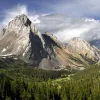
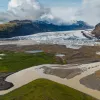
Our Trip Leaders know their destinations inside and out—and no two seasons tell quite the same story.
We asked a few of them to compare their favorite places in summer and winter, from changing landscapes and local traditions to the experiences that make each season unique.
Canadian Rockies
Summer

Trip Leader Anna Stone shared one of her favorite summer sightings: a “legendary grizzly bear called ‘The Boss’—he's been hit by two trains and survived, he's 700 or so pounds, and he has sired around 70 percent of all the grizzly bears in the area… and sometimes guests will see him while we're outside making our packed lunch in the morning.”
Winter
After a long day of snowshoeing, guests head for the saunas and hot tubs, and then Anna takes it to the next level, leading them all outside to do a deep snow plunge for what she calls a “Nordic spa, Canada style.” Trip Leader Ruby Woodruff takes guests for a plunge of a different sort—in a glacial lake near the lodge. “It’s quite the scene!” Tourists even gather around to catch a glimpse of the fun when this Backroads event happens.

Trip Leader Henry Orsini looks for the moment when guests first spot ice climbers making their way up the side of a glacier or a frozen waterfall. It’s a rare insight into the ice itself. He imparts the fascinating science behind what they are watching.
Experienced climbers tap the surface with their tools, listening to the sound: a reassuring, dense thud or the empty echo that means caution. They’re not just climbing. They’re constantly interpreting the ice. Deep blue ice comes from slow freezing and compression and is usually strong; tools work well here, sinking in deep and holding on. Ice that is lighter in color is cloudy with trapped air and is so brittle that when a tool strikes it, it could shatter.
A thrilling, slow-motion sport to behold.
Because the icy landscape is so inspiring, Henry also creates dedicated “mountain moments” where he encourages guests to stop and take time to truly see where they are and reflect. There is quiet, and often teary eyes, when the awe hits home.
Yellowstone
Winter
In winter, snow closes almost every road, quietly and completely. Trip Leaders usher guests across the white country on oversnow vehicles to one of the two hotels that remain open. They settle in, winter pressing in from every direction.

This kind of stillness takes hold of people. Linda Cassel, Backroads Regional Director and former Trip Leader, has seen it happen again and again in this staggering landscape. With no foothills to form a gentle introduction, the Teton Mountains surge abruptly upward from the fault line at their base. Up close, the entire range feels improbable, a beauty that’s hard to comprehend. Guests arrive amidst the usual travel chatter, but before long, they enter new conversational realms: the turns their lives have taken, and the ones they’re still considering.
Summer
Experiences like this add to the park’s underlying, magnificent fact—Yellowstone rests inside the vast caldera of a supervolcano. Heat rises from the depths, feeding the greatest concentration of geothermal features anywhere on earth. In the Upper Geyser Basin, more than five hundred geysers send water and steam skyward. Geysers even blast upward through the icy waters of Yellowstone Lake, where stories abound of people catching a fish, then cooking it right there in the water over an underwater steam vent.

The wildlife, too, is fittingly tremendous. The region is known as the Serengeti of North America, with its own Big Five: bison, elk, moose, wolves in winter and both black and grizzly bears. Backroads Trip Leader Laurie Forstrom knows she can’t promise wildlife sightings, but she does tell guests one thing with confidence:
“If you don’t see a bison, I’ll eat sagebrush.”
She hasn’t had to eat any yet.
Yellowstone is so astounding overall that early explorers’ descriptions failed to convince people it was real. In 1869, explorer C.W. Cook was so awestruck by what he witnessed that he submitted an article describing it to Lippincott’s, a monthly literature and science magazine. He received a “no” and a curt reply:
“Thank-you, but we do not print fiction.”
Dolomites
Winter
Senior Regional Field Lead Sarah Walker loves winter here, for its “jovial vibe—cozy hut culture with lounge chairs on the snow and music—sip a spritz, glass of local wine or bombardino! Lots of après-ski activity amidst an overall festive atmosphere. Plus, it's never that cold… and we have all these huts to take a break in for hot chocolate, coffee, and glühwein (spiced red wine)... back at the hotel, the sauna and Turkish bath are there to warm you up!”

Summer
The Dolomites are, in essence, the petrified skeletons of long-vanished coral reefs. Ancient corals, sponges and shelled organisms fossilized over time, and when two tectonic plates collided beneath them, they were lifted from the seafloor and thrust into the sky. As if the jagged peaks that emerged were not spectacular enough, at sunrise and sunset they glow—dramatic pinks, reds and purples—in an occurrence known as the enrosadira.
During summer, the valleys fill the daytime with colors: wildflowers. Sarah pointed to June through mid-July as the time to see them in all their glory. As an added summer bonus after a long hike, she takes guests for “a dip in a couple of Alpine lakes, or we put our feet in the streams—cold from all the snow runoff.”

Hiking through the valleys is a multicultural experience. Traffic signs are in two or three languages: German and Italian are both considered official languages here and some add Ladin (a Romance language descended from Latin). Tiny villages are strung like cultural beacons along the valleys for travelers to follow. No two are the same. They are distinguished by their specialties—cuisines, traditional dress and handicrafts. One is known for woodcarving, others favor wrought iron crafts, needlecraft, leather embroidering, basketmaking and pipe-making. Trip Leaders there love the historic festivals and outdoor music; it’s quintessential summertime.
Iceland
Summer

Backroads Trip Expert Giulia Delministro described how she, and guests, feel about exploring what she calls ‘Planet Iceland’:
“For active travelers, the real difference isn’t the forecast, it’s how the landscape invites you to move. Same country, but somehow two different ones. Same raw elements, two entirely different rhythms of adventure… Under the midnight sun (summer), daylight stretches late into the evening, dissolving any sense of limitation. You don’t rush, you link experiences together. A glacier hike in the morning turns into an afternoon river rafting run, a horseback ride flows into an evening hike beneath glowing skies.
This is the season of range where your sense of time dissolves. It’s not just that there’s more light; it’s that your stamina shifts with it. Guests often realize they’ve been active for 12 or more hours without feeling depleted.
The landscape energizes you.
Winter
Winter in Iceland feels harsher, yet quieter and more aware.
With fewer daylight hours, every outing feels intentional; the sun hangs low, casting a golden, cinematic glow across glaciers and lava fields. A midday glacier hike feels like never-ending golden hour, and if you are truly lucky, you can experience the breathtaking beauty of polar stratospheric clouds.

The activity menu narrows, but the depth increases. Movement becomes deliberate, you read wind direction, you pay attention to footing, you watch the sky, and you truly embrace the power of the elements. At the end of the day, when you step into geothermal warmth with the steam rising into the dark, the contrast feels elemental and earned.